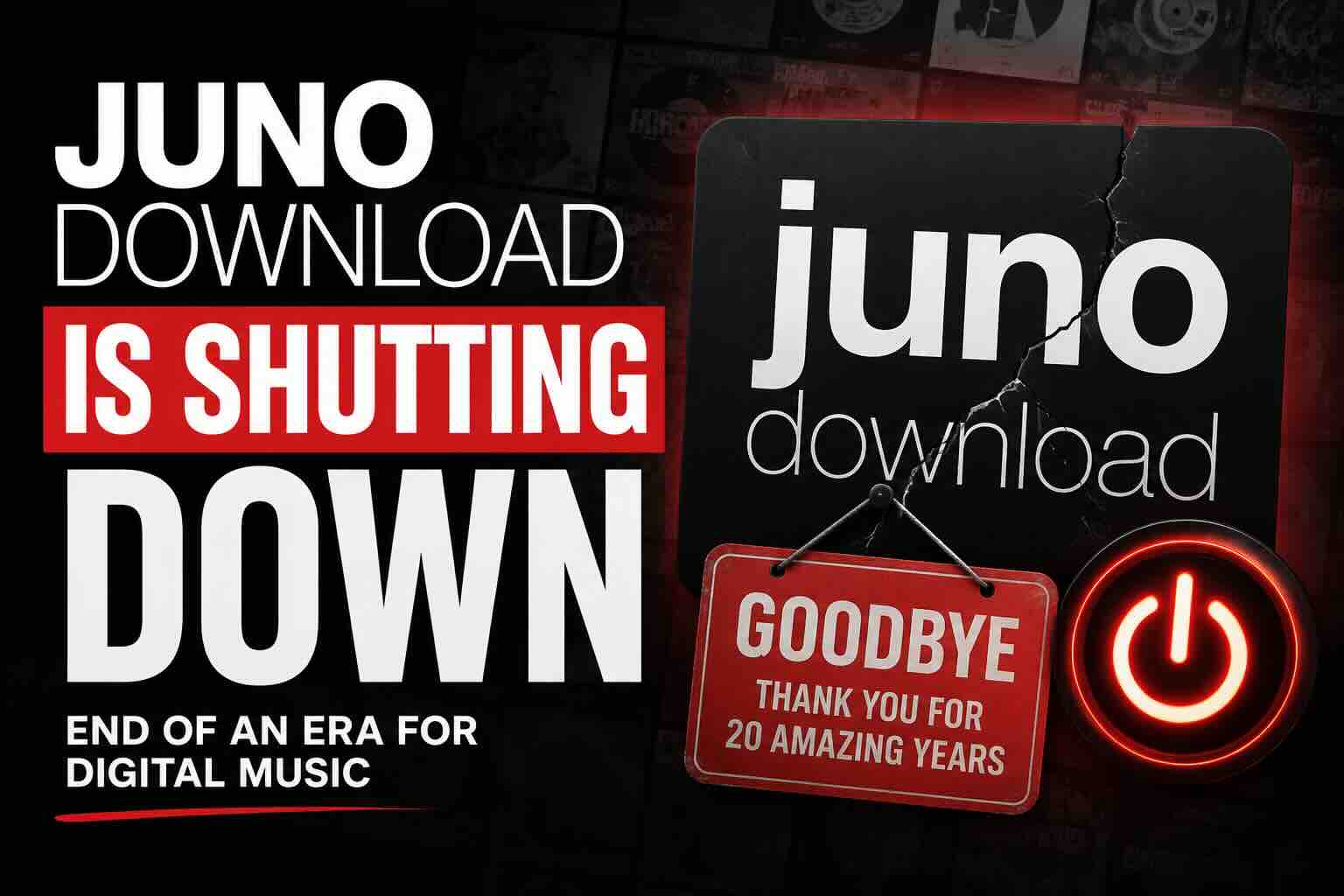
One of the internet’s longest-running digital music stores has officially closed its doors.
Juno Download, a popular platform for purchasing digital music files, announced its shutdown this week, ending nearly 20 years of service to music fans, DJs and collectors around the world.
Visitors to the website are now greeted by a farewell message stating:
“It’s been our privilege to share some of the most incredible music from the most amazing artists, but we’re sorry to say, that the time has come to say goodbye.”
The company also pointed users toward alternative platforms, including Beatport, Traxsource, Mixupload and Volumo, while confirming that previously purchased downloads will remain accessible through customer accounts.
The closure marks another sign of how dramatically the music industry has changed in the streaming era.
A Business Model Overtaken by New Technology
Founded in 2006, Juno Download emerged during a period when consumers were rapidly transitioning from physical CDs to digital music purchases.
The platform allowed customers to buy and permanently own music files, offering an alternative to physical media while giving users more control than subscription-based services.
At the time, digital downloads represented the future of music distribution.
However, over the past decade, streaming services such as Spotify, Apple Music and Amazon Music have fundamentally altered consumer behavior. Instead of purchasing individual tracks or albums, most listeners now pay monthly subscription fees for access to massive music libraries.
According to industry reports, streaming now accounts for the overwhelming majority of global recorded music revenue, leaving digital download platforms serving an increasingly niche audience.
Why Juno Download Could No Longer Compete
While the company has not disclosed detailed financial reasons for the shutdown, executives have pointed to broader industry changes.
The rise of streaming has significantly reduced demand for paid music downloads. At the same time, artists and independent labels now have more options for selling music directly to fans through platforms such as Bandcamp and social media-driven marketplaces.
These trends have created pressure on traditional digital retailers that once acted as the primary middlemen between artists and consumers.
As fewer people choose to purchase downloadable music files, maintaining large-scale download stores has become increasingly difficult.
The Decline of Digital Ownership
Juno Download’s closure highlights a larger shift occurring across the digital economy.
Consumers increasingly access content through subscriptions rather than ownership. The trend extends far beyond music, affecting industries such as film, television, software, gaming and publishing.
Streaming platforms have largely replaced DVD collections. Cloud-based software subscriptions have replaced one-time software purchases. Digital game libraries are increasingly tied to online ecosystems rather than physical copies.
Music appears to be following the same path.
For many consumers, convenience has become more valuable than permanent ownership.
However, critics argue that the decline of ownership gives users less control over their purchases and makes them dependent on platforms that can change pricing, licensing agreements or content availability at any time.
What Happens Next?
The closure of Juno Download leaves only a handful of major digital music download retailers serving the global market.
Industry leaders such as Beatport and Traxsource continue to operate, while platforms focused on direct artist support have gained popularity among independent musicians.
For existing Juno Download customers, the company says previously purchased music will remain available for download through user accounts.
Meanwhile, the broader music industry continues its transition toward streaming-first business models.
A Sign of the Times
Juno Download’s shutdown is more than the end of a single website.
It represents the continuing decline of an internet era built around digital ownership. What was once considered the future of music distribution has increasingly become a niche market in a world dominated by subscriptions and on-demand access.
As streaming services strengthen their grip on the industry, the closure serves as a reminder of how quickly technology can transform consumer habits—and how even long-established digital businesses can struggle to adapt when those habits change.